Today, the World Wide Web gained a new standard: ActivityPub. The recommendation has been published by the responsible W3C workgroup after 3 years of work, started in no small part by Christopher Lemmer Webber, founder of the Mediagoblin project. Nextcloud uses ActivityPub, implementing it to handle Activity federation between servers, crucial for our Global Scale architecture.
And indeed, you may already be using ActivityPub now without realizing it.
–Christopher Lemmer Webber
Nextcloud and ActivityPub
Nextcloud implements ActivityPub to inform users about changes to their files, new calendar and so on between users on different Nextcloud servers since Nextcloud 12. This makes ActivityPub part of what makes Nextcloud Global Scale work!
The Activity app which implements ActivityPub will continue to be improved, as its role has expanded over the years to inform users about a lot of things beyond file changes. Its core developer, Joas, blogged earlier about his todo list for the year, including changes to the Activity App.
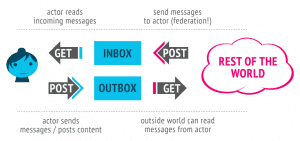
Illustration of how ActivityPub works from W3.org
What is ActivityPub
The origins of ActivityPub trace back to microblogging technology StatusNet, the former Laconia which was first widely implemented at identi.ca. Identi.ca has since migrated to pump.io, the successor to OStatus and the protocol it implements is essentially the base of ActivityPub. Evan Prodromou, the original author of Laconia and pump.io, designed the new protocol to use Activity Streams for commands and transfer data via a simple REST inbox API. The best place to get started to learn more about the protocol is on the W3.org website.
Christopher Lemmer Webber wrote a guest post on the Free Software Foundation blog explaining some history and features of the protocol. It provides a server-server protocol for federation and a client-server protocol for users to connect to a server. The core idea of ActivityPub is to bring together decentralized social networks, gaining critical user mass while keeping data on separate servers.
The popular Twitter alternative Mastodon is a prominent user, same goes for Mediagoblin which aims more at sharing photos and videos. And, then, Nextcloud of course!
Creato grazie all'impegno congiunto del nostro team, della community e dei partner, Nextcloud Hub 26 Summer prende forma da chi realmente utilizza i nostri strumenti ogni giorno. Crea lo spazio del tuo team con Nextcloud Teams, organizza i tuoi ricordi nel nuovo Nextcloud Foto e goditi gli aggiornamenti più richiesti in tutte le app. Continua a leggere per una panoramica completa della nostra ultima release!
Le organizzazioni, grandi e piccole, necessitano di una soluzione che garantisca la resilienza e la sovranità digitale delle loro operazioni: un'alternativa open source e rispettosa della privacy a Teams. E oggi presentiamo questa soluzione: Nextcloud Talk.
One year ago, the European Commission proposed the Digital Omnibus, a package to “simplify” EU digital rules. Its most important part is still being negotiated: a GDPR change that would make it easier for companies to train AI on your personal data, while EU governments want to weaken your right to say no. Here’s where things stand, who’s lobbying, and how to keep your data out of someone else’s AI.
What does the dependency on U.S. Big Tech put at risk and what can Canadian organizations learn from Europe’s digital sovereignty movement? In this article, we try to find the answers.
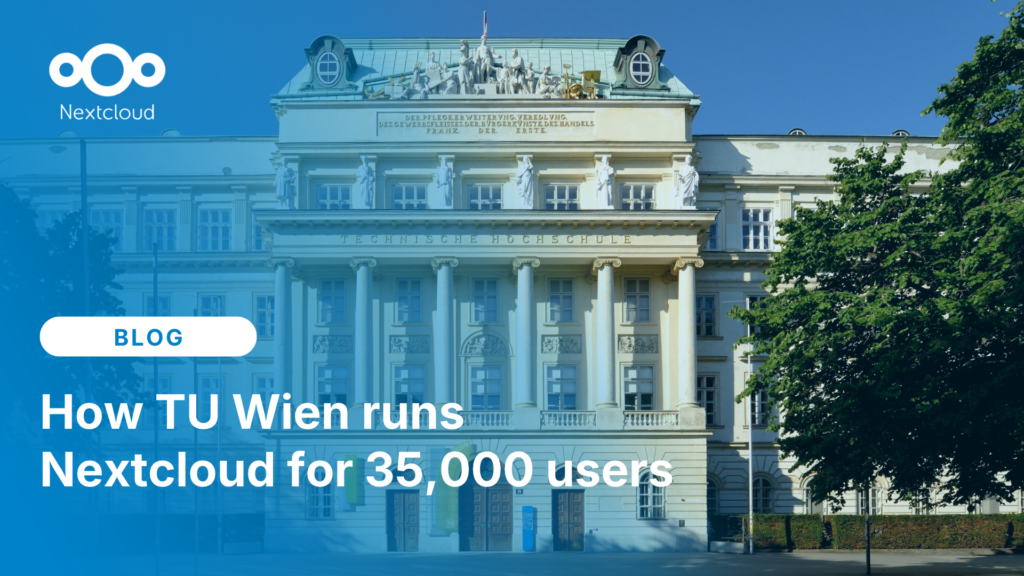
Jan Vales, System Administrator for the TUcloud at TU Wien, tells us about university's 35,000-user Nextcloud setup, how share links solved TU Wien’s external collaboration problems, and why he thinks open source should win over closed source.
Salviamo alcuni cookie per contare i visitatori e rendere il sito più facile da usare. Questi dati non lasciano il nostro server e non servono a tracciare il tuo profilo personale! Per maggiori informazioni, consulta la nostra Informativa sulla privacy. Personalizza
I cookie statistici raccolgono informazioni in forma anonima e ci aiutano a capire come i visitatori utilizzano il nostro sito web. Utilizziamo Matomo in cloud.
Servizio:Matomo
Descrizione del cookie:
_pk_ses*: Conta la prima visita dell'utente
_pk_id*: Aiuta a non contare due volte le visite.
mtm_cookie_consent: Ricorda il consenso alla memorizzazione e all'utilizzo dei cookie dato dall'utente.
Scadenza del cookie:_pk_ses*: 30 minuti
_pk_id*: 13 mesi
mtm_cookie_consent: 30 giorni