We’re joined by Anna Widenius and Michael „Monty“ Widenius, the people behind the MariaDB Foundation, who are here to help us unpack the challenges of the open source business, vendor lock-in, and owning your data through their unique lens — and experience.
And believe us, you will be interested to hear their story!
Anna Widenius is a CEO of the MariaDB Foundation, an organization that supports the sustainability, governance, and community of MariaDB. As prominent a thought leader as she is a driving force in the open source business, Anna will share insights into what the foundation — and its mission — are today.
Monty is a highly influential figure in the world of database development and open source software. He is the creator of the original MySQL database and MariaDB, originally a fork of the former, and a project through which Monty continues to lead the way in open source innovation.
To me, data sovereignty means being able to control your own data. Where it leaves, who can access it, in what format. And yes, it’s part of a broader concept of digital sovereignty which is essentially about self-determination in the digital world. And that said, in many ways it all begins with open source because control and freedom go hand in hand.
Anna Widenius
CEO, MariaDB Foundation
In this episode, after covering all the Whats, Whens, and Whys of open source and owning your data, we dive into more thought-provoking questions, including:
What would MySQL be today without MariaDB?
Is there anything Anna or Monty would have done differently?
And the big one — a question every leader in an open source community must grapple with:
How do you align your open source business with community stewardship and vitality?
This episode is for anyone active in the open source community or interested in open source software, as Anna and Monty give a behind-the-scenes look with wit and insight!
Join Monty’s keynote at the Nextcloud Community Conference!
Join the live keynote from Michael „Monty“ Widenius at the Nextcloud Community Conference 2025. Grab your ticket today. See you at the #NextcloudConf2025!
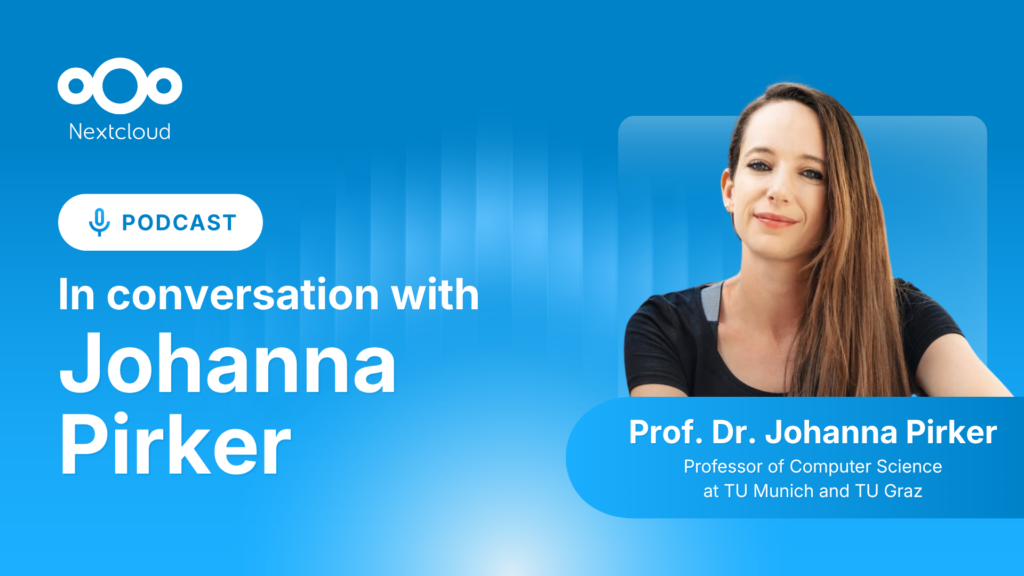
Johanna Pirker is a professor of computer science at TU Munich and TU Graz, founder of the Game Lab Graz, and a member of the UN Independent International Scientific Panel on AI. She works at the intersection of AI, games, virtual and augmented reality, and human-computer interaction. We tap into her perspective on where gaming meets learning, learning meets AI, and where open source tools foster innovation in her fields.
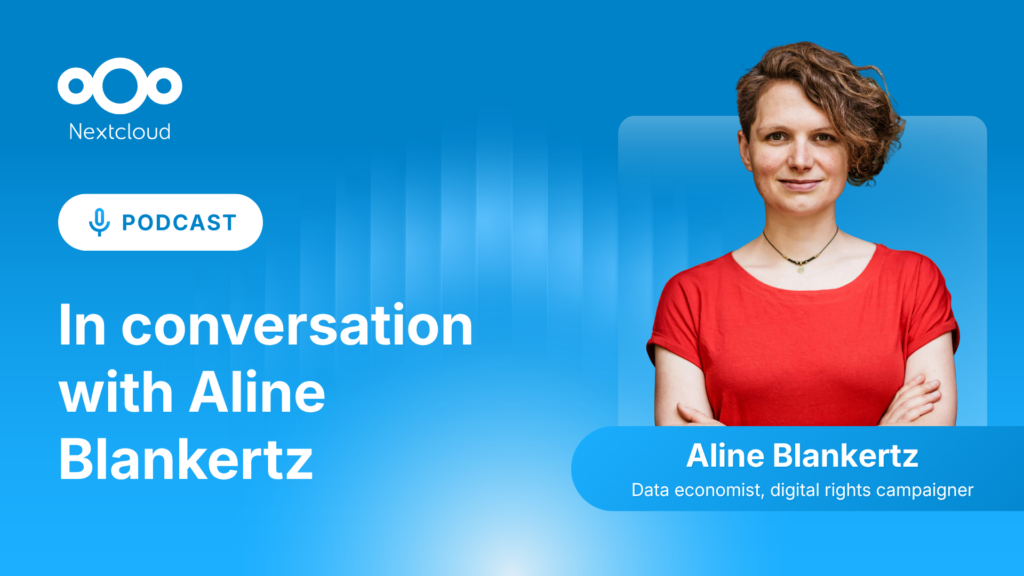
In this episode of the Nextcloud Podcast, we meet Aline Blankertz, a German data economist and digital rights campaigner. Aline is an economist and Tech Economy Lead at Rebalance Now, where she works on strategies to counter concentrated power in digital markets. She combines years of experience in competition economics with a strong commitment to making markets democratically accountable.
Im Jahr 2024 musste das Ministerium dringend seine Kollaborationstools modernisieren, nachdem Skype for Business eingestellt worden war. Auf der Suche nach einer neuen Lösung musste das Ministerium die strengen Vorgaben der DSGVO und der NIS2 einhalten. Sowohl die Unternehmensleitung als auch die Nutzer sprachen sich zunächst für Microsoft Teams aus, doch eine rechtliche Risikobewertung ergab erhebliche Bedenken hinsichtlich des Umgangs mit Daten in der Cloud.
Angesichts der Herausforderung, die Zusammenarbeit zu verbessern, zugleich gesetzliche Vorgaben einzuhalten und die Abhängigkeit von internationalen Konzernen und anderen Regierungen zu reduzieren, entschied sich das BMWET für Nextcloud als Lösung. Eine Hybridlösung, bei der Nextcloud-Hub-Apps über Sendent parallel zu Outlook und Teams laufen, ermöglicht es dem Ministerium, bestehende Arbeitsabläufe beizubehalten und gleichzeitig die digitale Autonomie zu fördern.
Die Herausforderung ging jedoch über die Auswahl der richtigen Lösung hinaus:
• Wie kann man Führungskräfte und Nutzer davon überzeugen, dass digitale Souveränität wirklich notwendig ist?
• Wie kann ein reibungsloser Übergang sichergestellt werden – sowohl für die Nutzer bei der Einführung neuer Tools als auch bei der Umsetzung der erforderlichen technischen Schutzmaßnahmen?
• Wie lassen sich kritische Dienste mit minimalem Risiko migrieren?
In diesem Interview sprechen wir mit Martin Ollrom über genau diese Fragen. Darüber hinaus sprechen wir darüber, welche Auswirkungen eine solche Migration auf andere öffentliche Einrichtungen hat und welche Lehren CIOs daraus ziehen können, die einen Wechsel von dominierenden Cloud-Lösungen hin zu europäischen Lösungen planen.
Wir speichern einige Cookies, um Besucher zu zählen und die Nutzung der Website zu erleichtern. Diese verlassen unseren Server nicht und dienen nicht der Verfolgung Ihrer online-Aktivitäten.
Weitere Informationen hierzu finden Sie in unserer Datenschutzrichtlinie. Anpassen
Statistik-Cookies sammeln anonym Informationen und helfen uns zu verstehen, wie unsere Besucher unsere Website nutzen. Wir verwenden cloud-gehostetes Matomo
Dienst:Matomo
Cookie-Beschreibung:
_pk_ses*: Zählt den ersten Besuch des Benutzers
_pk_id*: Hilft, die Besuche nicht doppelt zu zählen.
mtm_cookie_consent: Erinnert daran, dass der Nutzer seine Zustimmung zur Speicherung und Verwendung von Cookies gegeben hat.
Cookie-Ablauf:_pk_ses*: 30 Minuten
_pk_id*: 13 Monate
mtm_cookie_consent: 30 Tage